
In a tank with a variable cross-section, an equal increase in level does not represent an equal increase in volume throughout its height. Applying a linear scale to a level signal may therefore give an incorrect indication of the available quantity. The design must establish whether the incoming signal represents level or volume that has already been calculated.
The tank curve defines the conversion
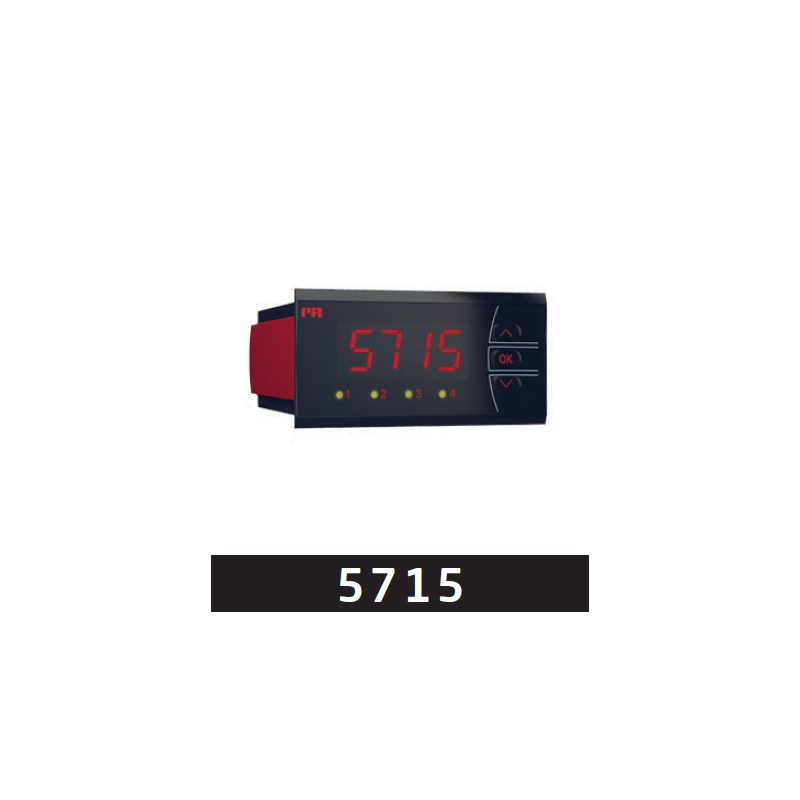
PR 5715D from PR electronics receives a 4–20 mA signal proportional to level from the transmitter. Linearisation using the tank's level-to-volume curve is configured on a PC with PReset and the PR 5909 interface. The indicator displays the process value and provides four relays for signalling thresholds.
The selected curve must correspond to the installed tank. If the transmitter already provides a signal proportional to volume, do not apply the level-to-volume conversion a second time.
Power supply and circuit checks
In this design example, the transmitter has its own power supply and an active 4–20 mA output. The indicator requires a separate supply, for example 24 V direct current (DC). The relay contacts are potential-free, so the switched circuits require an external supply.
During commissioning, compare the displayed value with known points on the tank curve. Include points that check the conversion where the cross-section changes. Each relay can be operated independently of the input to check its connected circuit. This test complements checks of the displayed volume and the configured thresholds.
Source: ATSEN LinkedIn post, published on 15 October 2026.