
A thermocouple provides millivolts, while a PLC analogue input may require 4…20 mA. Integration therefore requires both signal conversion and a correct relationship between the measured temperature and the range configured in the automation system.
From thermocouple voltage to temperature
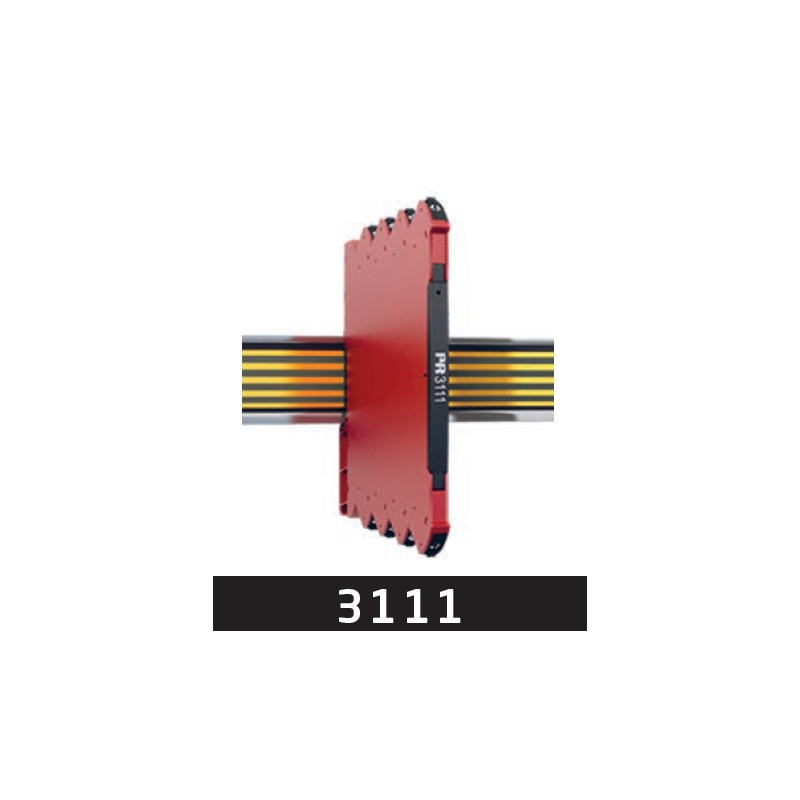
A thermocouple generates a voltage that depends on the temperatures of its two junctions, without an external power supply. PR 3111 from PR electronics measures a type J or K thermocouple. The thermocouple type and temperature range are selected using DIP switches.
The converter applies cold junction compensation, CJC, taking the connection temperature into account. This temperature can be measured internally or with an external Pt100. Selecting the thermocouple type and checking the compensation arrangement are therefore part of verifying the complete measurement chain.
PLC output and power supply
PR 3111 provides a 4…20 mA output scaled to the selected temperature range, with galvanic separation between input, output and supply. The converter has a separate power supply, for example 24 V direct current (DC).
The active output supplies current to a passive PLC input that does not power the loop. The total permitted load is no more than 600 Ω. The converter's separate supply should not be confused with powering the thermocouple, which generates its own measurement signal.
Acceptance checks
Match the DIP-selected range to the scaling in the PLC. If the displayed value is incorrect, check the selected type and range, cold junction compensation and the PLC's 4…20 mA-to-temperature mapping separately. These checks help distinguish a compensation error from incorrect PLC scaling.
Source: ATSEN LinkedIn post, published on 16 October 2026.